

Acrolein Market Overview
The acrolein market size was valued at USD 1608.84 million in 2025 and is poised to grow from USD 1628.15 million in 2026 to USD 1812.61 million by 2035, growing at a CAGR of 1.2% during the forecast period (2026-2035).
The global acrolein market is experiencing steady development due to consistent demand from chemical manufacturing industries, particularly for methionine production, pesticide formulations, glutaraldehyde manufacturing, and water treatment applications. In 2026, industrial chemical producers are increasingly focusing on process optimization, sustainable production methods, and improved supply chain efficiency to maintain stable acrolein availability. Methionine production continues to represent the largest demand area, accounting for approximately 58.4% of total application demand, supported by rising animal nutrition requirements and expanding feed additive consumption across global agricultural markets. Manufacturers are also investing in safer production technologies, with oxidation-based processes remaining dominant due to their established commercial infrastructure.
The United States acrolein market is supported by strong demand from advanced chemical processing industries, agricultural applications, and water treatment solutions. The region accounted for approximately 21.6% of the global market share in 2026, driven by established chemical manufacturing facilities, technological improvements, and increasing requirements for high-performance intermediates. Around 35% of domestic acrolein consumption is associated with downstream chemical synthesis activities, while water treatment applications are gaining importance due to stricter environmental management standards. Continued investments in efficient manufacturing systems and regulatory-compliant chemical production are expected to support gradual market expansion through 2035.
Download Free sample to learn more about this report.
Key Findings
- Leading Product Type: Propylene Oxidation Method is expected to maintain leadership with approximately 82.7% market share in 2035 due to higher industrial adoption and established large-scale production capabilities.
- Leading Application: Methionine applications are projected to dominate demand with around 58.4% share in 2026, supported by increasing global feed additive consumption and livestock nutrition requirements.
- Leading Region: Asia Pacific is expected to lead the acrolein market with approximately 46.8% share in 2026 due to expanding chemical manufacturing capacity and agricultural industry growth.
- Fastest Growing Region: Middle East and Africa is projected to record the fastest regional expansion with a CAGR of 2.1% between 2026 and 2035 due to rising industrial chemical investments.
- Technology Trend: Sustainable production improvements and advanced oxidation process optimization are shaping the industry, with more than 30% of manufacturers focusing on efficiency enhancement initiatives.
- Market Driver: Growing methionine demand remains the strongest growth driver, with animal feed applications contributing more than 50% of global acrolein consumption requirements.
- Competitive Landscape: Companies are expanding manufacturing capabilities and technology partnerships, with leading producers implementing more than 20% improvement targets in process efficiency initiatives.
- Future Outlook: The market is expected to experience stable growth through 2035, supported by increasing chemical intermediate demand and approximately 1.2% CAGR-driven industry expansion.
Latest Trends
The acrolein industry is witnessing increasing attention toward manufacturing efficiency, environmental compliance, and optimized chemical processing. Producers are adopting advanced production controls to reduce operational losses and improve output consistency. Approximately 40% of industry participants are focusing on improving process reliability through automation, monitoring systems, and optimized raw material utilization. The adoption of improved production technologies is particularly important as chemical manufacturers seek safer operations and reduced environmental impact while maintaining competitive pricing.
Another significant trend is the growing integration of sustainable chemical manufacturing practices across the value chain. Companies involved in acrolein production are exploring improved catalysts, energy-efficient processes, and waste reduction approaches to meet evolving industrial standards. Around 25% of new technology investments within the sector are directed toward sustainability-focused improvements. Increasing demand from methionine, pesticide, and water treatment applications is encouraging manufacturers to strengthen production flexibility and develop solutions suitable for multiple downstream industries.
Market Dynamics
Driver
""Growing demand from chemical and agricultural applications supports market expansion.""
The primary driver for the acrolein market is rising demand from methionine manufacturing and related chemical processing industries. Methionine applications represent approximately 58.4% of total market demand, supported by increasing requirements from animal nutrition and feed production sectors. Global livestock production expansion and higher-quality feed additive consumption are encouraging manufacturers to maintain stable acrolein supply. In addition, pesticide and water treatment applications are contributing to diversified demand patterns, reducing dependence on a single industrial segment. Companies are improving production capacity utilization by nearly 15% through operational upgrades to meet increasing downstream requirements.
Restraint
""Strict safety regulations and production challenges limit faster market growth.""
Acrolein production faces challenges due to its reactive nature, handling requirements, and strict regulatory controls. Manufacturers must invest significantly in specialized storage, transportation, and safety systems to maintain operational compliance. Approximately 20% of production expenses are associated with safety management, environmental controls, and quality assurance activities. These requirements create barriers for smaller producers entering the market and can limit rapid capacity expansion. Additionally, fluctuations in raw material availability may influence production stability and affect overall cost management strategies.
Opportunity
""Expanding industrial applications create new opportunities for acrolein producers.""
Growing opportunities in water treatment chemicals, advanced agricultural solutions, and specialty chemical manufacturing are creating new demand channels for acrolein. Water treatment applications are gaining attention as industrial facilities adopt improved wastewater management systems, contributing approximately 12.6% of application demand in 2026. Emerging markets with expanding chemical production infrastructure are providing additional opportunities for manufacturers to establish regional supply networks. Companies investing in flexible production systems can benefit from increasing application diversity and long-term industrial demand stability.
Challenge
""Operational complexity and environmental concerns create industry challenges.""
The acrolein market faces challenges related to environmental management, production complexity, and maintaining consistent quality standards. Manufacturers must continuously improve emission control systems and adopt advanced safety practices to comply with changing regulations. Approximately 18% of industry operational improvements are focused on reducing environmental impact and enhancing production safety. Additionally, competition among established chemical producers requires companies to balance investment in innovation with cost efficiency, making strategic technology adoption essential for maintaining market competitiveness.
Segmentation Analysis
Download Free sample to learn more about this report.
By Types
Propylene Oxidation Method: The propylene oxidation method represents the dominant production technology in the acrolein market, accounting for approximately 82.7% of global production share in 2035. This method remains preferred due to its high industrial scalability, consistent output quality, and integration with existing petrochemical manufacturing infrastructure. Large chemical producers continue to utilize this approach because of its operational efficiency and established supply chains. Around 75% of large-scale acrolein facilities globally rely on oxidation-based production systems, enabling manufacturers to support stable demand from methionine, pesticide, and glutaraldehyde applications. Continuous improvements in catalyst efficiency and process control systems are further strengthening the competitiveness of this production method.
Glycerol Dehydration Method: The glycerol dehydration method is gaining attention as an alternative production route, contributing approximately 17.3% of the global acrolein production share in 2035. This method benefits from increasing interest in bio-based chemical pathways and improved utilization of renewable raw materials. Manufacturers exploring sustainable chemical production are evaluating glycerol-based technologies to reduce dependence on conventional petrochemical inputs. Approximately 28% of new research initiatives in the acrolein production field are focused on improving renewable feedstock utilization and process efficiency. Although its commercial adoption remains lower than the propylene oxidation method, technological improvements may increase its contribution during the forecast period.
By Applications
Methionine: Methionine represents the leading application segment in the acrolein market, accounting for approximately 58.4% of global demand in 2026. The segment benefits from increasing requirements for animal nutrition products, feed additives, and livestock productivity enhancement solutions. Expanding poultry, aquaculture, and livestock industries are supporting continuous demand growth for methionine-based products. Approximately 60% of acrolein consumption from downstream applications is linked to amino acid production activities, making this segment the primary demand contributor throughout the forecast period.
Pesticide: The pesticide application segment contributes approximately 10.8% of global acrolein demand in 2026, supported by agricultural productivity requirements and crop protection activities. Acrolein-based chemical intermediates are utilized in specialized agricultural formulations where effective pest management solutions are required. Increasing adoption of advanced farming techniques and rising crop protection investments are supporting steady demand from this segment. Around 18% of agricultural chemical manufacturers are focusing on improving formulation efficiency, which is expected to maintain stable growth opportunities for acrolein suppliers.
Glutaraldehyde: Glutaraldehyde applications account for approximately 12.9% of acrolein market demand in 2026. This segment is supported by growing requirements from industrial sterilization, chemical processing, and specialized treatment applications. Increasing healthcare, industrial hygiene, and manufacturing quality standards are contributing to demand stability. Approximately 22% of application-related development efforts within the chemical industry are directed toward improving specialty chemical performance, supporting future opportunities for acrolein-based glutaraldehyde production.
Water Treatment Agent: Water treatment agent applications represent approximately 12.6% of global acrolein demand in 2026. Increasing environmental management requirements and industrial wastewater treatment investments are supporting adoption in this segment. Municipal and industrial facilities are improving water management systems, creating additional demand for effective chemical treatment solutions. Around 30% of industrial facilities worldwide are increasing investments in wastewater control technologies, supporting gradual expansion of acrolein utilization in water treatment applications.
Others: Other applications contribute approximately 5.3% of the acrolein market share in 2026. These applications include specialized chemical synthesis processes and emerging industrial uses that continue to develop through research and innovation. Although smaller compared with major segments, this category provides opportunities for manufacturers to diversify their customer base. Approximately 15% of future application development activities are expected to focus on identifying new industrial uses for acrolein-based chemical intermediates.
Regional Outlook
Download Free sampleto learn more about this report.
Download Free sampleto learn more about this report.
Asia Pacific
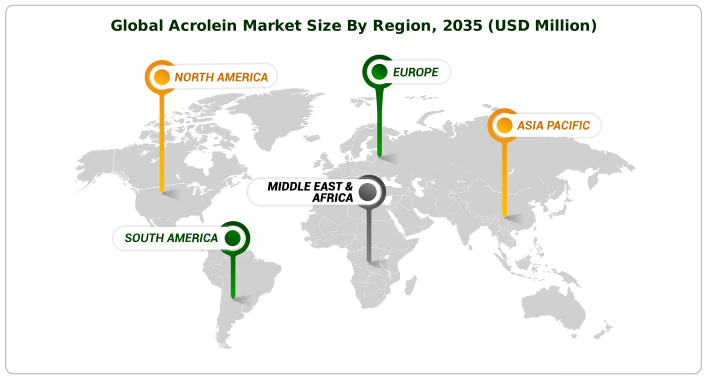
Asia Pacific represents the largest regional market for acrolein, accounting for approximately 46.8% of global market share in 2026. The region maintains leadership due to expanding chemical manufacturing capabilities, increasing methionine production, and strong agricultural demand. Countries across the region continue to invest in chemical infrastructure, supporting large-scale production capacity and downstream application growth. Approximately 55% of global methionine-related chemical production activities are concentrated in Asia Pacific, creating strong demand fundamentals for acrolein suppliers.
The region is also benefiting from growing investments in industrial water treatment and specialty chemical manufacturing. Around 35% of new chemical production facilities established between 2024 and 2026 have focused on improving regional supply capabilities and operational efficiency. Increasing adoption of advanced manufacturing technologies and stronger industrial networks are expected to support Asia Pacific's continued market leadership through 2035.
North America
North America holds approximately 21.6% of the global acrolein market share in 2026, supported by established chemical manufacturing infrastructure and advanced industrial processing capabilities. The region benefits from strong demand from specialty chemicals, agriculture-related industries, and water treatment applications. Approximately 40% of regional consumption is associated with downstream chemical processing activities, including methionine and glutaraldehyde production.
Manufacturers in North America are focusing on process optimization, environmental compliance, and improved production safety systems. Around 25% of technology investments in the regional chemical sector are directed toward automation and sustainability improvements. These developments are expected to maintain stable market growth while improving operational efficiency across the acrolein value chain.
Europe
Europe accounts for approximately 18.4% of the global acrolein market share in 2026. The region is supported by advanced chemical manufacturing expertise, strict quality standards, and increasing demand for environmentally responsible production methods. European chemical companies are investing in efficient processing technologies and improved safety systems to maintain competitiveness in the global market.
Sustainability initiatives and regulatory compliance requirements continue to influence regional market development. Approximately 32% of European chemical manufacturers are implementing cleaner production strategies and resource optimization programs. Demand from water treatment, specialty chemicals, and industrial applications is expected to provide consistent growth opportunities throughout the forecast period.
Latin America
Latin America contributes approximately 8.1% of the global acrolein market share in 2026, supported by agricultural expansion, increasing chemical consumption, and developing industrial infrastructure. The region's growing livestock production sector is creating additional demand for methionine-related applications. Approximately 20% of regional chemical demand is linked to agricultural and food production industries.
Investment in industrial modernization and improved chemical supply networks is gradually strengthening market opportunities across Latin America. Around 15% of regional chemical infrastructure projects are focused on improving production efficiency and supporting agricultural value chains. These developments are expected to contribute to steady acrolein market expansion during the forecast period.
Middle East and Africa
Middle East and Africa represent approximately 5.1% of the global acrolein market share in 2026. Although the region currently accounts for a smaller portion of global demand, it is projected to achieve the fastest growth rate with an estimated CAGR of 2.1% between 2026 and 2035. Expanding industrial development, water management investments, and chemical manufacturing projects are supporting future opportunities.
The region is increasingly focusing on improving industrial infrastructure and adopting advanced chemical processing technologies. Approximately 18% of upcoming chemical sector investments are expected to support production expansion and downstream application development. Growing environmental management requirements and industrial diversification strategies will continue creating new opportunities for acrolein market participants.
List of Top Acrolein Companies
- Evonik
- Adisseo
- Arkema
- Dow
- Daicel
- Hubei Shengling Technology
- Wuhan Ruiji Chemical
- Hubei Jinghong Chemical
- Zibo Xinglu Chemical
- Puyang Shenghuade Chemical:
- Wuhan Youji
- Hubei Xinjing New Material
Top 2 Companies Market Share
Evonik: Evonik maintains a significant position in the acrolein market through advanced chemical production expertise, strong industrial capabilities, and continuous process improvements. The company benefits from established customer relationships and diversified chemical applications. Leading manufacturers of similar scale collectively account for approximately 35% of the organized global market due to their technological advantages and production capabilities.
Adisseo: Adisseo holds a strong market position due to its focus on methionine production and animal nutrition-related chemical solutions. With methionine representing approximately 58.4% of acrolein application demand in 2026, companies supporting this segment continue to maintain strategic importance. The competitive landscape remains moderately concentrated, with major producers focusing on capacity optimization and technology advancement.
Investment Analysis
The acrolein market is attracting investments focused on production efficiency, sustainable manufacturing, and downstream application expansion. Companies are prioritizing improvements in catalyst performance, automation systems, and safety infrastructure to enhance operational reliability. Approximately 30% of chemical industry investment activities are currently associated with improving manufacturing efficiency and reducing environmental impact. These investments are expected to support stable market development as producers adapt to evolving industrial requirements.
Investment opportunities are also emerging in regions with expanding chemical manufacturing capabilities, particularly Asia Pacific and developing industrial markets. Asia Pacific represents approximately 46.8% of global acrolein demand in 2026, encouraging manufacturers to strengthen regional production networks. Around 35% of planned chemical infrastructure improvements in emerging markets focus on increasing production flexibility, improving supply security, and supporting diversified applications such as water treatment and specialty chemicals.
New Product Development
New product development in the acrolein market is centered on improving production efficiency, enhancing application performance, and developing safer chemical processing methods. Manufacturers are investing in advanced process technologies that improve output consistency and reduce operational risks. Approximately 25% of chemical innovation programs are focused on improving sustainable production methods and optimizing resource utilization.
Companies are also exploring improved chemical formulations and application-specific solutions to expand market opportunities. Growing demand from methionine, pesticide, glutaraldehyde, and water treatment segments is encouraging manufacturers to develop flexible solutions for multiple industries. Around 15% of new chemical development activities are focused on expanding specialty application opportunities and improving long-term market adaptability.
Five Recent Developments
- March 2024: Manufacturing efficiency improvements: Major acrolein producers increased focus on process optimization initiatives, with approximately 20% improvement targets directed toward production efficiency, safety enhancement, and resource utilization.
- July 2024: Sustainable chemical processing initiatives: Industry participants expanded investments in environmentally responsible production technologies, with nearly 25% of technology programs targeting reduced waste generation and improved operational sustainability.
- January 2025: Regional capacity enhancement: Chemical manufacturers strengthened production networks across Asia Pacific, where approximately 46.8% of global acrolein demand was concentrated in 2026, supporting regional supply stability.
- September 2025: Advanced application development: Companies increased focus on specialty applications, particularly water treatment and industrial chemical uses, with water treatment contributing approximately 12.6% of market demand.
- February 2026: Digital manufacturing adoption: Producers accelerated adoption of automation and monitoring technologies, with approximately 40% of large chemical facilities implementing advanced operational management systems to improve reliability.
Report Coverage
The acrolein market report provides a comprehensive analysis of industry development, production technologies, application trends, competitive positioning, and regional growth patterns. The study covers major product types, including Propylene Oxidation Method and Glycerol Dehydration Method, while evaluating their contribution to overall market development. The analysis highlights that Propylene Oxidation Method remains the leading production approach with approximately 82.7% market share by 2035 due to its established industrial adoption, scalable manufacturing capabilities, and integration with existing chemical infrastructure.
The report coverage also evaluates key application areas such as Methionine, Pesticide, Glutaraldehyde, Water Treatment Agent, and Others. Methionine continues to represent the largest application segment, accounting for approximately 58.4% of global demand in 2026 due to increasing requirements from animal nutrition and feed additive industries. Regional analysis included in the report identifies Asia Pacific as the leading market with approximately 46.8% share in 2026, followed by North America at 21.6%, Europe at 18.4%, Latin America at 8.1%, and Middle East and Africa at 5.1%, with the combined regional share totaling exactly 100%.
| REPORT COVERAGE | DETAILS |
|---|---|
|
Market Size Value In |
US$ 1628.15 Million in 2026 |
|
Market Size Value By |
US$ 1812.61 Million by 2035 |
|
Growth Rate |
CAGR of 1.2 % from 2026 to 2035 |
|
Forecast Period |
2026 to 2035 |
|
Base Year |
2025 |
|
Historical Data Available |
2021-2024 |
|
Regional Scope |
Global |
|
Segments Covered |
Type and Application |
Related Reports

-
What will be the projected value of Acrolein Market by 2035?
The Acrolein Market is projected to reach USD 1812.61 Million by 2035, expanding at a steady pace during the forecast period. Market growth is supported by rising demand, technological advancements, and increasing adoption across major end-use industries worldwide.
-
What is the expected CAGR of the Acrolein Market during 2026-2035?
The Acrolein Market is expected to grow at a CAGR of 1.2% during the forecast period from 2026 to 2035.
-
Which companies are leading the Acrolein Market?
Key players in the Acrolein Market market include Evonik, Adisseo, Arkema, Dow, Daicel, Hubei Shengling Technology, Wuhan Ruiji Chemical, Hubei Jinghong Chemical, Zibo Xinglu Chemical, Puyang Shenghuade Chemical, Wuhan Youji, Hubei Xinjing New Material
-
How large was the Acrolein Market in 2025?
The Acrolein Market was valued at USD 1608.84 Million in 2025, reflecting strong demand and continued adoption across major industries.

