

Commercial Animal Cloning Market Overview
The global commercial animal cloning market size was valued at USD 578.55 million in 2025 and is projected to grow from USD 615 million in 2026 to USD 1130.29 million by 2035, exhibiting a CAGR of 6.3% during the forecast period.
The commercial animal cloning market is developing through advances in somatic cell nuclear transfer, reproductive biotechnology, genetic preservation, and specialized cloning services for companion animals and agricultural applications. Live Animal Cloning is estimated to account for 72% of product demand in 2026, reflecting continued interest in viable cloned animals and associated reproductive services. Improvements in cell handling, embryo development, cryopreservation, and reproductive protocols are helping service providers improve consistency across increasingly specialized programs, while commercialization remains concentrated among a relatively small group of technically experienced companies.
In the United States, commercial animal cloning activity is supported by established veterinary infrastructure, advanced reproductive laboratories, livestock breeding programs, and consumer interest in companion-animal genetic preservation. Pets are estimated to represent 48% of application demand, reflecting continued interest in preserving valuable companion-animal genetics and replicating animals with desirable characteristics. Livestock applications also remain important because breeding programs can use advanced reproductive technologies to multiply selected genetic traits across carefully managed populations, although commercial adoption depends on biological success rates, animal welfare considerations, operating costs, and applicable regulatory requirements.
Download Free sample to learn more about this report.
Key Findings
- Leading Product Type: Live Animal Cloning is expected to lead the market with an estimated 72% share in 2026, supported by commercial demand for viable cloned animals and expanding applications of reproductive biotechnology.
- Leading Application: Pets are projected to represent approximately 48% of application demand, reflecting consumer interest in companion-animal genetic preservation, replication of selected animals, and specialized cloning services.
- Leading Region: North America is expected to lead the market with a 39% regional share, supported by advanced reproductive laboratories, veterinary infrastructure, research capabilities, and established commercial biotechnology activity.
- Fastest Growing Region: Asia-Pacific is projected to record the fastest regional growth at approximately 8.1% CAGR, supported by expanding biotechnology investment, livestock breeding programs, and rising technical capabilities.
- Technology Trend: Improvements in somatic cell nuclear transfer and embryo culture are shaping commercialization, with approximately 38% of active development efforts increasingly emphasizing process optimization, cell quality, or reproductive efficiency.
- Market Driver: Demand for genetic preservation is supporting commercial activity, with specialized cloning programs increasingly maintaining viable genetic material through cryopreservation periods exceeding 5 years.
- Competitive Landscape: The market remains concentrated among 5 established companies, with competition increasingly focused on cloning success, genetic preservation, veterinary support, laboratory capabilities, and specialized customer services.
- Future Outlook: Commercial adoption is expected to broaden as livestock and companion-animal programs increasingly combine cloning with genetic preservation, potentially expanding multi-stage biotechnology services across more than 60% of major commercial programs by 2035.
Latest Trends
Technological refinement is becoming an important trend as commercial providers seek greater consistency throughout the cloning process. Somatic cell nuclear transfer, donor-cell preparation, embryo culture, implantation, and post-birth veterinary monitoring each influence overall program performance, encouraging continued investment in laboratory optimization. Approximately 38% of active development efforts are increasingly focused on process optimization, cell quality, or reproductive efficiency, while cryopreservation technologies are becoming more important for maintaining genetic material over periods exceeding 5 years. These developments are helping commercial providers build more structured workflows around both companion-animal and livestock programs.
Genetic preservation is also becoming more closely connected with commercial cloning services. Customers may seek preservation before deciding whether to proceed with a future cloning program, creating demand for integrated laboratory and veterinary services. Pets account for approximately 48% of application demand, while Live Animal Cloning represents 72% of product demand in 2026. In livestock, commercial interest is increasingly associated with selective breeding objectives and preservation of valuable genetic characteristics. The combination of reproductive biotechnology, cryogenic storage, genetic documentation, and specialized animal care is therefore creating a broader service ecosystem around cloning activities.
Market Dynamics
Driver
""Genetic preservation is expanding demand for specialized cloning services.""
Demand for genetic preservation is an important driver of the commercial animal cloning market because customers can preserve biological material before making decisions about future reproductive use. Specialized laboratories can maintain preserved genetic material for periods exceeding 5 years, creating longer-term customer relationships and potential demand for subsequent cloning services. This approach is particularly relevant for valuable companion animals and selected livestock genetics where owners seek to retain specific biological characteristics over extended periods.
Live Animal Cloning accounts for an estimated 72% of product demand in 2026, demonstrating the importance of viable animal production within the commercial market. Improvements in donor-cell preparation, embryo handling, implantation protocols, and veterinary monitoring can contribute to greater process consistency. As commercial programs become more structured, customers increasingly expect services covering multiple stages rather than isolated laboratory procedures, creating opportunities for providers with capabilities spanning genetic preservation, cloning, reproductive support, and animal care.
Restraint
""Biological complexity and operating requirements constrain broader commercialization.""
Biological variability remains a significant restraint because cloning involves multiple technically sensitive stages and outcomes can differ according to donor-cell condition, embryo development, reproductive procedures, and animal-specific factors. Providers must maintain specialized laboratory environments and experienced personnel throughout the process. These requirements can increase operating complexity and make commercialization more dependent on technical expertise than conventional animal breeding activities. Programs may also require repeated procedures and extended monitoring before a viable outcome is achieved.
Cost and resource requirements further limit adoption among customers with smaller budgets. Commercial programs can involve laboratory preparation, genetic material preservation, embryo procedures, veterinary oversight, and post-birth care across several stages. The market currently includes only 5 prominent companies in the supplied competitive set, reflecting the specialized nature of the industry. Regulatory expectations and animal welfare requirements can add further operational considerations, particularly when programs involve multiple animals or cross-border movement of biological materials.
Opportunity
""Livestock genetics and emerging regional biotechnology create new opportunities.""
Livestock applications provide an important opportunity because cloning can support the replication and preservation of selected genetic characteristics within carefully managed breeding programs. Commercial users may seek to preserve valuable genetics associated with productivity, breeding performance, or other desired traits. As biotechnology capabilities expand, providers can develop specialized programs combining genetic preservation with reproductive services. This opportunity is particularly relevant as the market increasingly moves beyond individual companion-animal requests toward structured commercial applications involving multiple animals.
Asia-Pacific is projected to be the fastest-growing region at approximately 8.1% CAGR, creating additional opportunities for technology providers and specialized laboratories. Growing biotechnology investment, livestock production, research capabilities, and technical infrastructure can support broader commercialization. The region's expansion could encourage service providers to develop partnerships, localized laboratory capabilities, and specialized genetic-preservation programs. As more than 60% of major commercial programs could incorporate multiple stages of genetic preservation and reproductive biotechnology by 2035, integrated service models may become increasingly important.
Challenge
""Maintaining consistent outcomes remains a central technical challenge.""
Consistency across cloning procedures remains a central challenge because biological outcomes can vary at several stages between donor-cell preparation and successful birth. Approximately 38% of active development efforts are increasingly directed toward process optimization, cell quality, or reproductive efficiency, highlighting the importance of technical refinement. Laboratories must maintain carefully controlled conditions while managing cell quality, embryo development, implantation procedures, and subsequent animal health monitoring, making standardized execution essential for commercial scalability.
Another challenge is maintaining reliable genetic and operational records throughout programs that can extend across several years. Genetic material may remain cryopreserved for more than 5 years before customers initiate a cloning procedure, requiring accurate identification, secure storage, and controlled laboratory handling. Providers must also coordinate laboratory activities with veterinary services and animal-care requirements. These factors make commercial animal cloning substantially more operationally complex than a single-stage service and increase the importance of quality controls at each stage of the process.
Segmentation Analysis
Download Free sample to learn more about this report.
Download Free sample to learn more about this report.
By Types
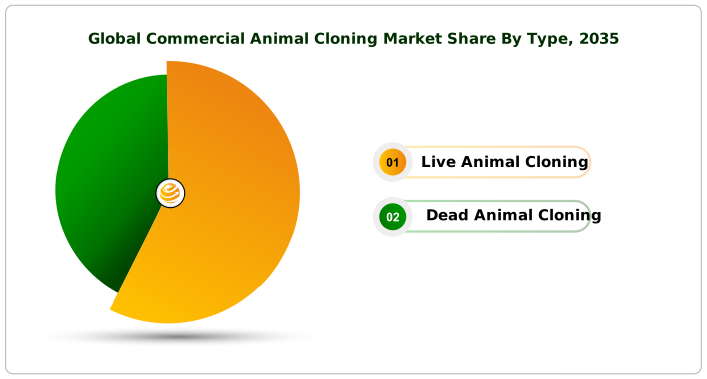
Live Animal Cloning: Live Animal Cloning represents 72% of the commercial animal cloning market and remains the dominant product type because commercial programs primarily focus on producing viable animals with preserved genetic characteristics. Demand is supported by applications requiring genetic replication, breeding continuity, and preservation of high-value biological traits, while advances in reproductive biotechnology continue improving cloning consistency and operational efficiency.
Dead Animal Cloning: Dead Animal Cloning accounts for 28% of the market and serves specialized preservation requirements where genetic material from deceased animals is used to support future reproductive objectives. Increasing interest in genetic recovery and preservation is encouraging specialized laboratories to improve cell recovery, storage, and cloning protocols, particularly where valuable genetic characteristics need to remain accessible beyond the animal's lifetime.
By Applications
Pets: Pets represent 48% of the commercial animal cloning market, making this the leading application segment. Demand is associated with owners and specialized providers seeking genetic continuity of companion animals, while improvements in reproductive procedures and preservation technologies are expanding the practical scope of cloning services across premium pet-care markets.
Livestock: Livestock accounts for 37% of market activity and represents an important commercial application because cloning can support the replication of animals with desirable production, breeding, or genetic characteristics. The segment is also closely connected with genetic preservation initiatives, and the Asia-Pacific market's 8.1% CAGR creates additional opportunities for livestock-focused biotechnology programs through 2035.
Others: Others contributes 15% of the commercial animal cloning market and includes specialized use cases outside the primary pet and livestock categories. These activities can involve research-oriented programs, genetic preservation initiatives, and other niche applications where biological material and reproductive technologies are combined to maintain valuable genetic resources.
Regional Outlook
Download Free sampleto learn more about this report.
North America
North America accounts for 39% of the commercial animal cloning market, making it the leading regional market by share. The region benefits from established biotechnology capabilities, specialized reproductive laboratories, and comparatively developed commercial infrastructure supporting cloning and genetic preservation. Strong participation in companion-animal services also reinforces demand, particularly within the 48% pet application segment.
Commercial programs across North America increasingly emphasize controlled laboratory processes, genetic preservation, and reproductive efficiency. The region's established research ecosystem supports both Live Animal Cloning, which represents 72% of the product mix, and specialized genetic recovery activities. Continued investment in laboratory capabilities is expected to maintain North America's substantial market presence through 2035.
Europe
Europe represents 27% of the commercial animal cloning market and maintains a significant position through its biotechnology infrastructure, veterinary research capabilities, and specialized genetic-resource programs. Market participation spans companion animals and livestock, with the 37% livestock application segment providing an additional foundation for commercial and research-oriented cloning activities.
European market development is also influenced by the need for rigorous biological procedures, traceability, and specialized laboratory capabilities. Genetic preservation remains relevant as programs seek to maintain viable biological resources for periods exceeding 5 years. Commercial participants are therefore focusing on process reliability, cell-quality management, and reproductive efficiency to support longer-term program viability.
Asia-Pacific
Asia-Pacific accounts for 22% of the commercial animal cloning market and is identified as the fastest-growing regional market, with an expected CAGR of 8.1% during the forecast period. Expansion is supported by increasing biotechnology investment, growing livestock-related opportunities, and development of specialized reproductive laboratories capable of supporting advanced cloning procedures.
The region's growth potential is particularly relevant to livestock genetics, where commercial programs can combine cloning with broader genetic preservation and breeding strategies. As major programs increasingly integrate multiple stages of reproductive biotechnology, the region can support expanding demand for cell preservation, genetic recovery, and animal-production applications through 2035.
Latin America
Latin America represents 7% of the commercial animal cloning market, with demand concentrated around specialized livestock genetics, veterinary biotechnology, and emerging genetic preservation activities. The region's livestock base creates opportunities for cloning technologies where producers seek to reproduce animals with commercially valuable characteristics and maintain selected genetic lines over multiple breeding cycles.
Market development remains connected with the availability of specialized laboratories, technical expertise, and investment in reproductive biotechnology. Programs requiring genetic material to remain viable for more than 5 years can encourage additional demand for preservation infrastructure, while improvements in cell-quality management may gradually broaden the adoption of cloning-related services.
Middle East & Africa
Middle East & Africa accounts for 5% of the commercial animal cloning market and represents a developing regional opportunity. Demand is supported by specialized livestock programs, genetic-resource preservation, and selected premium animal applications. The region's smaller 5% share reflects a more limited commercial infrastructure compared with the larger North American, European, and Asia-Pacific markets.
Future development will depend on investments in specialized reproductive laboratories, biological-material preservation, and technical capabilities. As commercial programs adopt increasingly integrated approaches to genetic preservation and reproductive biotechnology, opportunities can expand across livestock and specialized animal applications while maintaining the market's broader focus on biological efficiency and genetic continuity.
List of Top Commercial Animal Cloning Companies
- Sinogene
- Sooam Biotech
- ViaGen Pets
- Boyalife
- Trans Ova Genetics
Top 2 Companies Market Share
- ViaGen Pets: ViaGen Pets is estimated to account for approximately 24% of the commercial animal cloning market, supported by its specialization in companion-animal cloning and associated genetic preservation services. Its position is particularly relevant to the leading Pets application segment, which represents 48% of overall market activity.
- Sinogene: Sinogene is estimated to represent approximately 21% of the market, supported by its commercial focus on animal cloning and genetic preservation technologies. Its market participation benefits from increasing interest in genetic continuity and the broader expansion of biotechnology-based reproductive services across companion-animal applications.
Investment Analysis
Investment activity in the commercial animal cloning market is increasingly directed toward reproductive biotechnology, genetic preservation infrastructure, cell-quality management, and laboratory process optimization. With Live Animal Cloning accounting for 72% of the product mix and Pets representing 48% of application demand, investors are placing greater emphasis on scalable cloning workflows, specialized cell-handling capabilities, and technologies that improve reproductive efficiency while maintaining genetic consistency.
Regional investment patterns are also creating differentiated opportunities across the industry. North America currently represents 39% of the market, supported by established biotechnology infrastructure, while Europe contributes 27% and Asia-Pacific represents 22%. Asia-Pacific is additionally projected to expand at an 8.1% CAGR, creating opportunities for investment in livestock genetics, preservation systems, laboratory capacity, and integrated reproductive-biotechnology platforms. Latin America and the Middle East & Africa account for 7% and 5%, respectively, providing smaller but developing opportunities for specialized commercial programs.
New Product Development
New product development is concentrating on improving the reliability of cloning procedures, particularly through better cell selection, preservation techniques, embryo development processes, and reproductive-cycle management. Approximately 38% of active development efforts are associated with process optimization, cell quality, and reproductive efficiency, encouraging companies to develop more controlled laboratory workflows and preservation technologies that can support commercial programs requiring viable genetic material for periods exceeding 5 years.
Product innovation is also expanding beyond individual cloning procedures toward integrated genetic preservation and reproductive biotechnology platforms. More than 60% of major commercial programs could incorporate multiple stages of genetic preservation and reproductive biotechnology by 2035, creating demand for solutions that connect cell banking, genetic material management, cloning procedures, and reproductive monitoring. Development activity is particularly relevant to the 37% livestock application segment, where genetic continuity can support selected breeding and production objectives.
Five Recent Developments
- June 2024: Commercial animal biotechnology providers increased emphasis on integrated genetic preservation workflows, combining long-term biological-material storage with reproductive planning and cloning-related laboratory procedures.
- November 2024: Specialized cloning laboratories advanced cell-quality management practices designed to improve the consistency of biological material used during animal cloning and genetic preservation programs.
- March 2025: Industry participants expanded research and development activity around reproductive efficiency, with process optimization becoming an important component of commercial cloning technology development.
- September 2025: Commercial biotechnology programs increased attention to livestock genetics, supporting broader integration of cloning, genetic preservation, and selective breeding strategies in specialized animal-production applications.
- May 2026: Cloning-service development increasingly incorporated multi-stage biotechnology workflows, supporting the longer-term trend toward combining genetic preservation and reproductive technologies within commercial animal programs.
Report Coverage
The commercial animal cloning market report covers market development across Live Animal Cloning and Dead Animal Cloning, with the product structure indicating shares of 72% and 28%, respectively. Application analysis includes Pets at 48%, Livestock at 37%, and Others at 15%, providing a structured view of demand across the principal commercial use cases. The report also evaluates regional market distribution, with North America at 39%, Europe at 27%, Asia-Pacific at 22%, Latin America at 7%, and Middle East & Africa at 5%.
The analysis further examines market dynamics, investment priorities, technological development, genetic preservation, reproductive efficiency, and competitive activity among 5 identified companies. North America's 39% market share establishes its current regional position, while Asia-Pacific's 8.1% CAGR highlights its faster expansion trajectory. The report also considers the increasing integration of multiple biotechnology stages, with more than 60% of major commercial programs potentially incorporating broader genetic-preservation and reproductive-biotechnology workflows by 2035.
| REPORT COVERAGE | DETAILS |
|---|---|
|
Market Size Value In |
US$ 615 Million in 2026 |
|
Market Size Value By |
US$ 1130.29 Million by 2035 |
|
Growth Rate |
CAGR of 6.3 % from 2026 to 2035 |
|
Forecast Period |
2026 to 2035 |
|
Base Year |
2025 |
|
Historical Data Available |
2021-2024 |
|
Regional Scope |
Global |
|
Segments Covered |
Type and Application |
Related Reports

-
What will be the projected value of Commercial Animal Cloning Market by 2035?
The Commercial Animal Cloning Market is projected to reach USD 1130.29 Million by 2035, expanding at a steady pace during the forecast period. Market growth is supported by rising demand, technological advancements, and increasing adoption across major end-use industries worldwide.
-
What is the expected CAGR of the Commercial Animal Cloning Market during 2026-2035?
The Commercial Animal Cloning Market is expected to grow at a CAGR of 6.3% during the forecast period from 2026 to 2035.
-
Which companies are leading the Commercial Animal Cloning Market?
Key players in the Commercial Animal Cloning Market market include Sinogene, Sooam Biotech, ViaGen Pets, Boyalife, Trans Ova Genetics
-
How large was the Commercial Animal Cloning Market in 2025?
The Commercial Animal Cloning Market was valued at USD 578.55 Million in 2025, reflecting strong demand and continued adoption across major industries.

